
As artificial intelligence (AI) tools gain more prevalence in the software industry, many positions are evolving to adapt to the changing workflows. AI can complete many of the time-consuming tasks that were previously done by software professionals, allowing software development companies to streamline their teams and shift their workflows to account for AI’s growing presence.
One of the roles that has been most impacted by the rise of AI is that of the product manager. The question is, has AI altered the role of the software product manager or wiped it out completely?
What is a Software Product Manager?
A software product manager oversees a product from initial conception through deployment and beyond. The product manager’s role is far-reaching. Some of their key responsibilities include:
- Executing market research and user analyses to gain insights about market trends and user needs.
- Prioritizing software features based on market analysis, timeline, and budget.
- Verifying that the software solution meets the client’s business goals and the end users’ needs.
- Serving as the point-of-contact for the client.
- Being the go-to person for team members when issues or obstacles arise.
Where Projects Still Need Product Managers
AI tools are now providing solutions that expedite the product development lifecycle, such as market research, user analysis, and product strategy development. With AI’s ability to perform these roles, you may be wondering whether your project still needs a product manager.
The short answer is yes; product managers are still vital members of the product development team.
Though AI is handling many of the repetitive tasks that used to be completed by product managers, there are still many aspects of their role that require a human touch.
Turning Data into Insights
AI has the power to collect and organize immense amounts of data in real time. Where software teams used to manually collect information from users and tests and then organize and analyze it, AI tools can now collect data, identify patterns, and flag points of note or concern. However, while AI can provide beneficial insights, it cannot turn those insights into strategic decisions that balance the needs of the client, the software team, and the end users.
Prioritizing Ethics and Morals
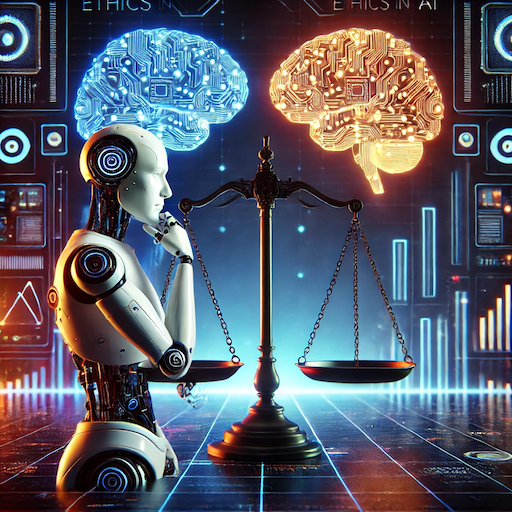
It’s no secret that the ethics of AI have yet to be ironed out. Whenever a team uses AI tools for software development, the product manager must carefully consider the ethical implications. The product manager is responsible for understanding and mitigating risks associated with privacy, security, intellectual property (IP), legal regulations, and more.
From a moral perspective, a product manager must oversee AI-generated text and code to verify that they have not been negatively impacted by the model’s biases. If AI-generated biased or harmful language is released with a product, it can be detrimental to the client, the software development company, and the users who use the software.
Collaborating and Communicating with Teams and Stakeholders
At the end of the day, one of the product manager’s main jobs is to facilitate communication and collaboration between cross-functional teams of client contacts, designers, developers, engineers, and more. With the integration of AI tools, product managers now have even more players to monitor, including data scientists, data engineers, business intelligence professionals, and even the AI itself.
Product managers are now not only bridging the gap between the software team and the client but also the language gap between data science and product development.
Prioritizing AI’s Benefits Throughout the Product Lifecycle
Simply knowing that you can use AI in your project isn’t enough. If product managers want to decrease cost and time to market, they must understand each AI tool’s capabilities so that they can use them effectively throughout the product lifecycle. In fact, it’s just as crucial for product managers to know when not to use AI as it is to know when to use it.
Product managers must also understand the capabilities and shortcomings of their AI tools to integrate the best tool stacks into their projects. Understanding the proper use case for each AI tool and how the tools all work together is paramount for creating seamless workflows.
While each team can choose the tool they wish to use, a product manager is needed to see the larger picture and understand how all the tools work together throughout the product development lifecycle. If the tools don’t integrate successfully, it can create problems within the software, ultimately costing your project time rather than saving it.
Challenges for Product Managers Integrating AI
Though AI tools are saving product managers time and helping make their workflows more efficient and enjoyable, the inclusion of AI also creates new challenges for product managers, including:
- Lifelong Learning: While most product managers have backgrounds in software design, development, or marketing, they must now become experts in data science as well. To effectively use AI tools, product managers must understand AI and stay up to date with new AI trends and changes. Continual upskilling and learning will be required for product managers who wish to stay competitive in their field.
- Transparency: As the go-between for the various stakeholders on the project, the product manager must be able to effectively answer questions and concerns that arise. Given the lack of transparency surrounding AI models, this becomes more difficult with AI. When product managers do not fully understand a tool, it is much more difficult for them to justify its use or lack thereof.
- Ongoing Maintenance: AI tools are evolving at an incredibly rapid rate as the technology continues to improve. Therefore, products that utilize AI will need continual, long-term maintenance and monitoring to maintain relevance. In many instances, organizing this monitoring falls on the shoulders of the product manager.
Successful Product Managers Make Successful Products
At Grio, our product managers are at the forefront of the AI transition. They understand how AI can be used at every step of the product development lifecycle to expedite time to market, decrease budget, and create value-add features that set your software solution up for success.
To find out how our product managers can turn your great idea into an even greater app, contact us for a free consultation.
As artificial intelligence (AI) tools gain more prevalence in the software industry, many positions are evolving to adapt to the changing workflows. AI can complete many of the time-consuming tasks that were previously done by software professionals, allowing software development companies to streamline their teams and shift their workflows to account for AI’s growing presence. … Continue reading → Read More