
South Korea and the United States have initiated high-level discussions aimed at bolstering their collaboration in the field of artificial intelligence (AI), setting the stage for a strategic focus on technology at an upcoming bilateral summit. The talks, held in Seoul, brought together key officials to explore opportunities for expanding cooperation and developing a joint initiative on strategic technologies.
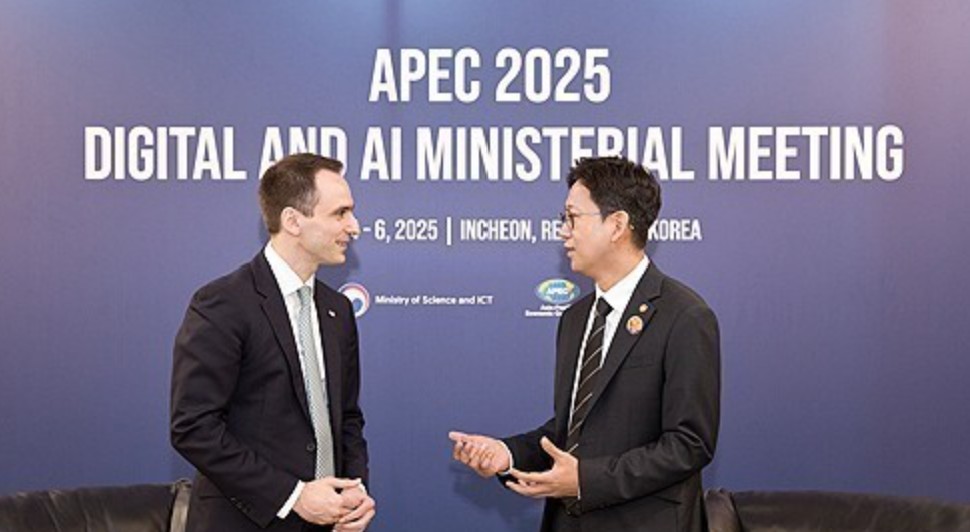
The meeting took place on the sidelines of the Asia-Pacific Economic Cooperation (APEC) 2025 Digital and AI Ministerial Meeting. South Korean Science Minister Bae Kyung-hoon met with the Director of the White House Office of Science and Technology Policy, Michael Kratsios, to discuss a wide range of issues, with a particular emphasis on AI.
According to the Ministry of Science and ICT, Minister Bae expressed hope for establishing a joint bilateral initiative on strategic technology. This new push for collaboration is intended to build momentum ahead of a highly anticipated summit between South Korean President Lee Jae-myung and U.S. President Donald Trump. Beyond AI, the officials also touched upon other critical sectors, including biotechnology and next-generation nuclear energy.
This pre-summit engagement highlights the growing recognition in both Washington and Seoul of AI’s strategic importance. With the global AI landscape becoming increasingly competitive, both nations are keen to leverage their respective strengths—South Korea’s prowess in semiconductors and manufacturing, and the U.S.’s leadership in foundational research and development—to maintain a competitive edge.
The discussions come as the U.S. has unveiled an “AI Action Plan” to secure its technological dominance, while South Korea has been pursuing its own “sovereign AI” strategy. The talks are a crucial step toward finding a balance between these national ambitions and forging a cooperative alliance that benefits both economies. A potential “AI stack accord” has been suggested as a way to integrate U.S. and South Korean capabilities, strengthening supply chains and fostering the free flow of talent between the two countries.
The outcome of these preliminary talks and the subsequent bilateral summit could significantly shape the future of U.S.-South Korea relations, moving beyond traditional security alliances to a new era of techno-economic partnership centered on strategic technologies.