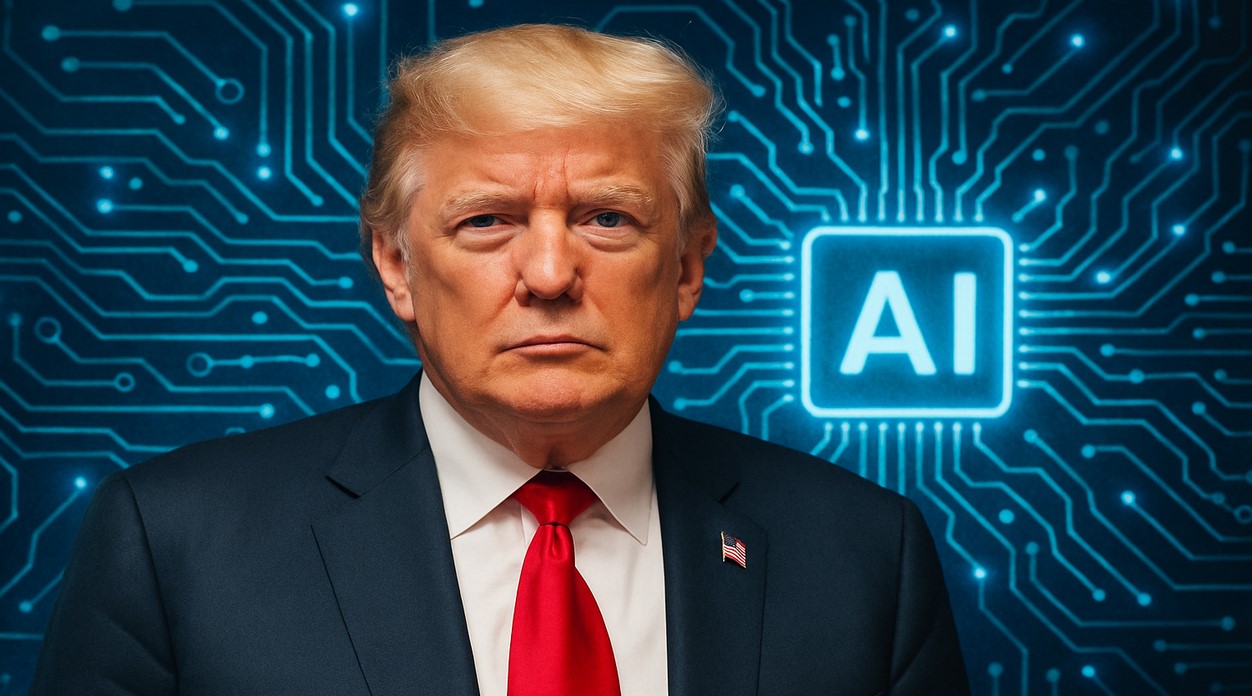
The Trump administration today unveiled a sweeping “AI Action Plan” designed to propel the United States to “global dominance” in artificial intelligence, emphasizing deregulation and a rapid build-out of critical infrastructure. The complete strategy, titled “Winning the Race: America’s AI Action Plan,” outlines over 90 federal policy actions focused on accelerating innovation, bolstering domestic AI infrastructure, and top in international AI diplomacy and security.
At the core of the administration’s approach is a marked shift away from what it deems “onerous” regulations, advocating for a “light hand” in governing the burgeoning AI sector. The plan calls for federal agencies to identify, revise, or repeal regulations that could hinder AI development and deployment, and even suggests withholding federal funding from states that implement “burdensome” AI regulations. This includes rolling back environmental protections to fast-track the construction of energy-intensive data centers and semiconductor manufacturing plants, crucial components for powering advanced AI models.
A significant focus of the plan is to counter what the White House describes as “ideological bias” in AI models. New federal procurement guidelines will mandate that government agencies only contract with AI developers whose systems are “objective and free from top-down ideological bias,” ensuring they prioritize “truth-seeking and ideological neutrality.” This move is seen as a direct response to conservative critiques of perceived liberal leanings in current AI chatbots. The National Institute of Standards and Technology’s (NIST) AI Risk Management Framework will also be revised to eliminate references to “misinformation, diversity, equity and inclusion, and climate change.”
Beyond domestic policy, the plan sets an aggressive agenda for U.S. leadership on the global stage. It proposes an “America’s AI Alliance” and an “American AI Exports Program,” aiming to deliver “full-stack AI export packages” – including hardware, software, models, applications, and standards – to allied nations. This is intended to solidify the U.S. position in shaping global AI norms and counter the influence of adversarial nations, particularly China, in the AI race. The administration also seeks to strengthen export controls on advanced AI computing technology to prevent it from falling into the wrong hands.
While the plan has garnered support from segments of the tech industry, eager for less regulatory oversight and accelerated infrastructure development, it has also drawn criticism. Opponents, including civil liberties groups and environmental advocates, express concerns that the aggressive deregulation could lead to unchecked AI development with insufficient safeguards, potentially exacerbating issues like algorithmic bias and environmental impact. The emphasis on “unbiased AI” is also a point of contention, with critics arguing that it risks stifling ethical considerations and overlooking inherent biases in data.