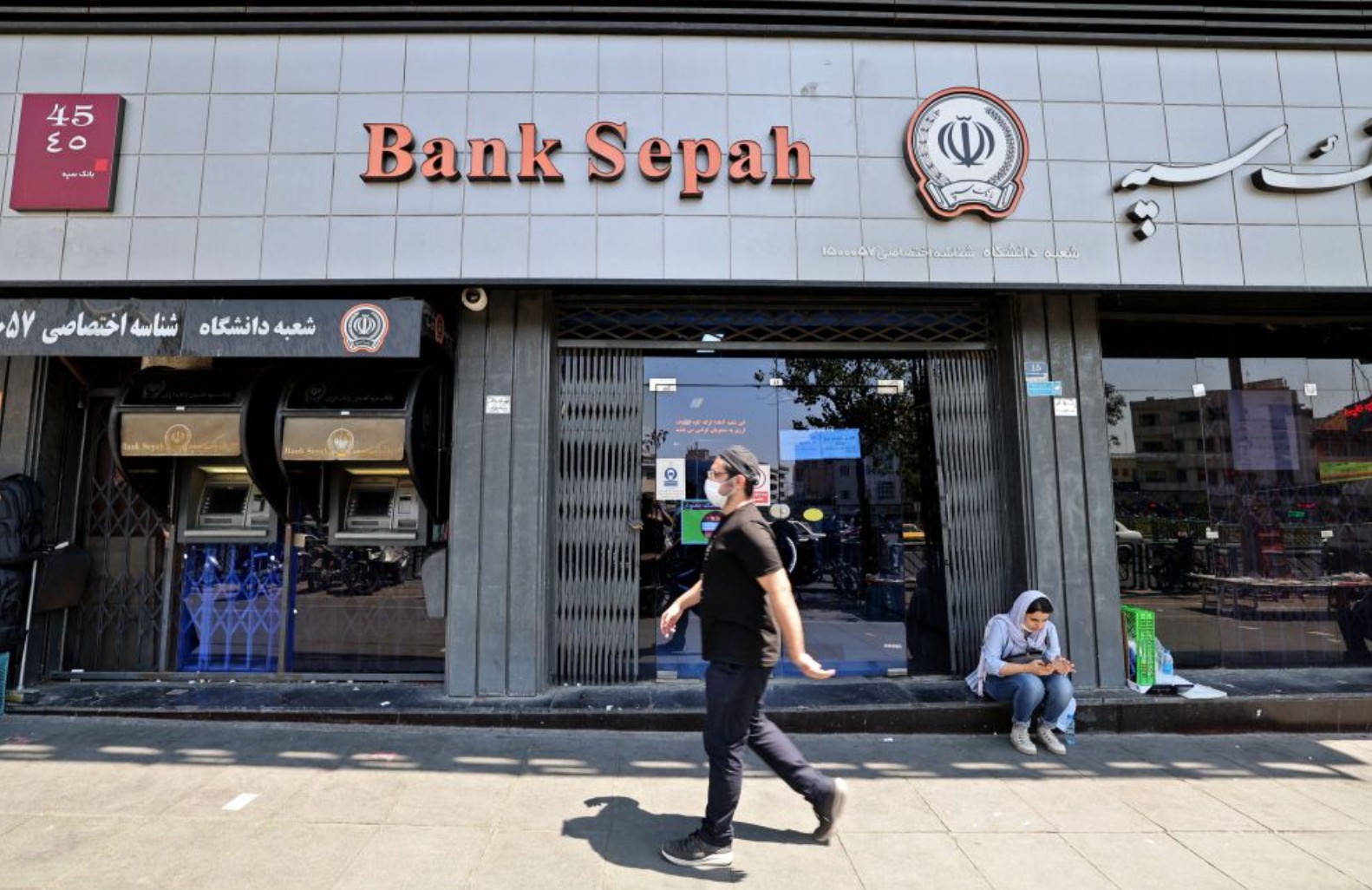
Iran’s state-owned Bank Sepah has reportedly been hit by a significant cyberattack, top to widespread disruptions in its services across the country. A hacktivist group, identifying itself as “Predatory Sparrow” (also known as Gonjeshke Darande), has claimed responsibility for the assault, asserting they “destroyed all data” at the institution.
Reports from various Iran-focused media outlets indicate that Bank Sepah branches are closed, customers are unable to access their accounts, and payment processing systems are down.
The disruption also appears to have affected other military-linked banks, Kosar and Ansar, further exacerbating the financial turmoil. While Iranian authorities have not publicly acknowledged the attack, the IRGC-linked Fars news agency briefly reported that issues affecting Bank Sepah’s infrastructure would be resolved within hours.
Predatory Sparrow, a group widely believed to have ties to Israel, stated their motive was to target Bank Sepah for its alleged role in financing Iran’s ballistic missile and nuclear programs, as well as its efforts to circumvent international sanctions.
In a public statement, the group warned, “This is what happens to institutions dedicated to maintaining the dictator’s terrorist fantasies.” This incident marks another escalation in the ongoing cyber conflict in the region, with such attacks increasingly impacting critical infrastructure.
This is not the first time Predatory Sparrow has claimed responsibility for disruptive cyber operations against Iranian entities. The group has previously taken credit for attacks on Iranian steel mills, the country’s rail system, and gas station payment networks, demonstrating a pattern of targeting strategic sectors. Cybersecurity experts note the sophistication of these attacks, which often coincide with periods of heightened geopolitical tension.
The immediate impact on ordinary Iranians is significant, as access to essential banking services is hindered. The broader implications of such a successful attack on a major financial institution include potential capital flight, erosion of public trust in the banking system, and further economic instability for a country already grappling with international sanctions.
The incident underscores the growing threat of state-sponsored or state-aligned hacktivist groups leveraging cyber capabilities to exert pressure and disrupt adversaries in the digital domain.