

• Home
  • News
  • AI
  • Cyber
  • GRC
  • Blogs
  • Live CVE
No Result
View All Result
Sumtrix
  • Home
  • News
  • AI
  • Cyber
  • GRC
  • Blogs
  • Live CVE
No Result
View All Result
Sumtrix
No Result
View All Result
Home AI

Guest Post: Why AI Regulation Won’t Work for Quantum

Jane Doe by Jane Doe
July 1, 2025
in AI
Guest Post: Why AI Regulation Won’t Work for Quantum
Share on FacebookShare on Twitter

As the world grapples with the complexities of artificial intelligence and its burgeoning regulatory landscape, a critical distinction is emerging: the unique challenges posed by quantum computing demand a fundamentally different approach to governance. While the European Union’s complete AI Act seeks to mitigate risks associated with AI, experts argue that a “one-size-fits-all” regulatory framework designed for AI will prove ineffective, and potentially even detrimental, when applied to quantum technology.

The core argument hinges on the inherent differences between AI and quantum computing. AI, particularly in its generative forms, learns and evolves based on vast datasets, top to concerns about bias, misinformation, and unpredictable outcomes. Regulatory efforts, such as the EU AI Act’s harm-based approach, are tailored to address these issues by focusing on transparency, accountability, and risk assessment related to AI’s decision-making capabilities and potential societal impacts.

Quantum computing, however, operates on entirely different principles. Unlike AI, quantum computers do not “learn” or “evolve” unpredictably over time. Their power lies in their ability to interpret the physical world in novel ways, solving problems that are currently intractable for even the most powerful classical supercomputers. This distinction is crucial. Quantum systems, with their unstable “qubits” and intricate “error correction,” are complex but fundamentally deterministic in their operation, constrained by the laws of quantum mechanics and their programming.

Read

App Store Power and Censorship: How Apple and Google Shape Your Digital Future

Google Sets Sights on Defying Gravity with Antigravity Project

The primary risks associated with quantum technology are not rooted in autonomous decision-making or emergent behavior, but rather in who controls the technology and for what purpose. Breakthroughs in quantum computing will have profound implications, particularly in areas like cryptography, drug development, and material science. The concern then shifts to issues of access, national security, and the potential for quantum advantage to exacerbate existing inequalities if not managed carefully.

Regulators attempting to extend AI-centric frameworks to quantum computing face significant hurdles. The rapid pace of quantum innovation, coupled with the profound technical expertise required to understand its nuances, makes it difficult for existing regulatory bodies to keep pace. Furthermore, the global nature of quantum research and development necessitates international collaboration, which can be hindered by overly restrictive or ill-conceived domestic regulations.

Ultimately, effective governance for quantum computing will require a deep understanding of its unique characteristics, distinct from those of AI. It calls for a flexible, forward-looking approach that fosters innovation while addressing the specific ethical, security, and societal challenges inherent to this transformative technology. Simply porting AI regulations is not the solution; a bespoke framework is essential to harness the true potential of the quantum era responsibly.

Previous Post

Inside the 2025 Cybersecurity Wake-Up Call: Stealthier Attacks, Rising Burnout, and Internal Misalignments Threaten Global Cyber Defenses

Next Post

Cyril Shroff AI Law Centre of Jindal Global Law School Launched in London by Harvard Law Professor

Jane Doe

Jane Doe

More Articles

MMaDA-Parallel: Advanced Multimodal Model Revolutionizing Content Generation
AI

MMaDA-Parallel: Advanced Multimodal Model Revolutionizing Content Generation

MMaDA-Parallel is a cutting-edge framework for multimodal content generation that departs from traditional sequential models by enabling parallel processing of...

by Jane Doe
November 19, 2025
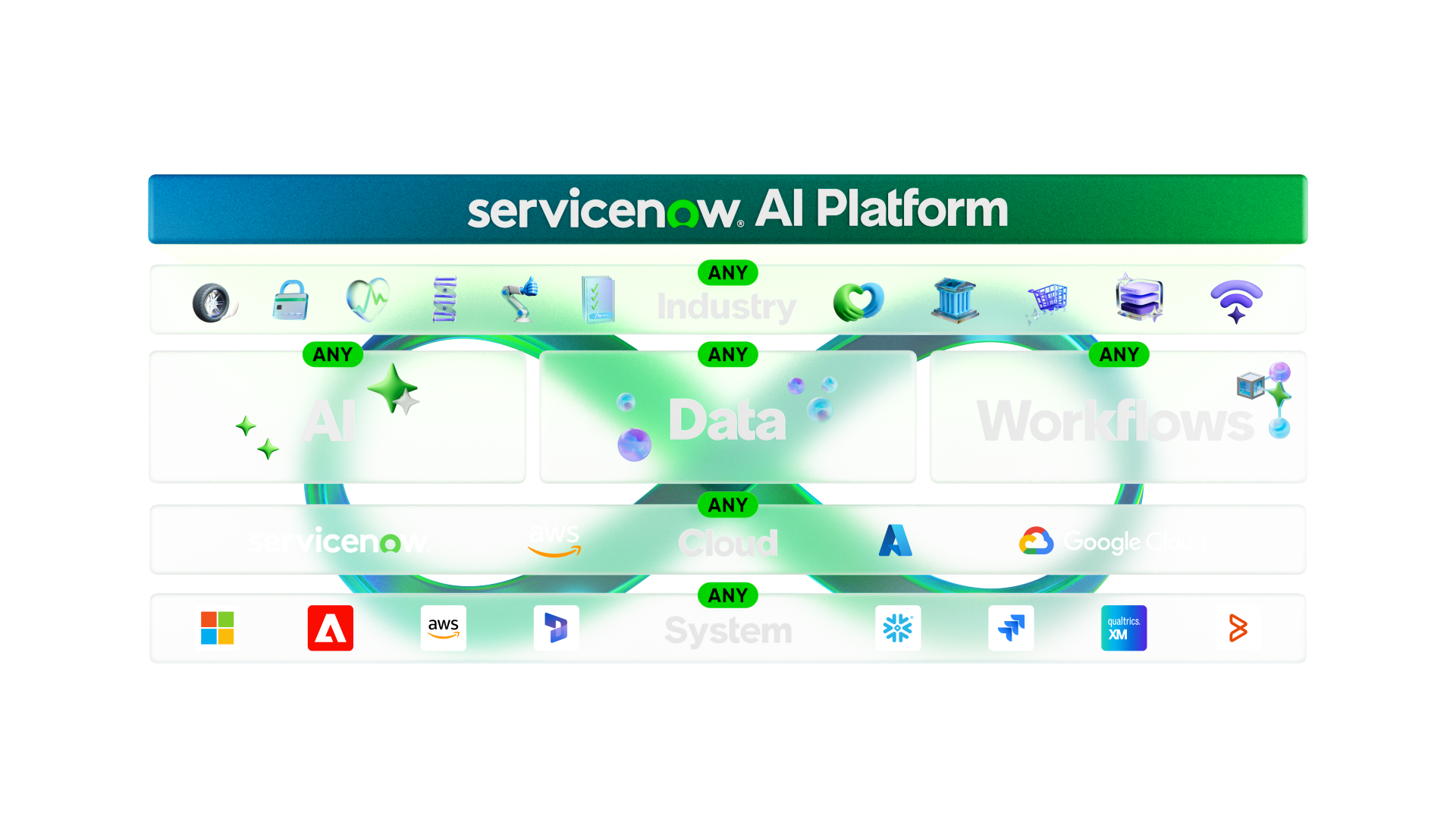
ServiceNow AI Agents Vulnerable to Sophisticated Prompt Injection
AI

ServiceNow AI Agents Vulnerable to Sophisticated Prompt Injection

Attack Method: Researchers found second-order prompt injection attacks exploiting ServiceNow's Now Assist AI agents, leveraging their agent-to-agent discovery for unauthorized...

by Mayank Singh
November 19, 2025
European Union Introduces New Regulations Changing Data Privacy Landscape
AI

European Union Introduces New Regulations Changing Data Privacy Landscape

The European Union is implementing significant updates to its regulatory framework governing data privacy and automated decision-making. These new regulations,...

by Sumit Chauhan
November 19, 2025
Google Show Gemini 3: New Frontier in AI
AI

Google Show Gemini 3: New Frontier in AI

Google has officially launched Gemini 3, its latest leap forward in generative artificial intelligence technology. Positioned to compete at the...

by Sumit Chauhan
November 19, 2025
Next Post
Cyril Shroff AI Law Centre of Jindal Global Law School Launched in London by Harvard Law Professor

Cyril Shroff AI Law Centre of Jindal Global Law School Launched in London by Harvard Law Professor

Leave a Reply Cancel reply

Your email address will not be published. Required fields are marked *

I agree to the Terms & Conditions and Privacy Policy.

Latest News

China Accuses US of Cyberattacks Using Microsoft Email Server Flaws

China Accuses US of Cyberattacks Using Microsoft Email Server Flaws

August 1, 2025
Online Scam Cases Continue to Rise Despite Crackdowns on Foreign Fraud Networks [Myanmar]

Online Scam Cases Continue to Rise Despite Crackdowns on Foreign Fraud Networks [Myanmar]

June 30, 2025
Stay Safe from Ransomware Using Skitnet Malware Techniques

Stay Safe from Ransomware Using Skitnet Malware Techniques

May 20, 2025
MMaDA-Parallel: Advanced Multimodal Model Revolutionizing Content Generation

MMaDA-Parallel: Advanced Multimodal Model Revolutionizing Content Generation

November 19, 2025
Anthropic Blocks AI Misuse for Cyberattacks

Anthropic Blocks AI Misuse for Cyberattacks

August 28, 2025
New VoIP Botnet Targets Routers Using Default Passwords

New VoIP Botnet Targets Routers Using Default Passwords

July 25, 2025
Aflac Incorporated Discloses Cybersecurity Incident

Aflac Incorporated Discloses Cybersecurity Incident

June 20, 2025
Sumtrix.com

© 2025 Sumtrix – Your source for the latest in Cybersecurity, AI, and Tech News.

Navigate Site

  • About
  • Contact
  • Privacy Policy
  • Advertise

Follow Us

No Result
View All Result
  • Home
  • News
  • AI
  • Cyber
  • GRC
  • Blogs
  • Live CVE

© 2025 Sumtrix – Your source for the latest in Cybersecurity, AI, and Tech News.

Our website uses cookies. By continuing to use this website you are giving consent to cookies being used. Visit our Privacy and Cookie Policy.